Ooty( Tamil Nadu) Placed near the beautiful city of Coimbatore, Ooty is one of the frequently visited Hill Station in India. It takes almost 12 hrs from Chennai to go to Ooty. The best way to travel is to take a train from Chennai, go to Coimbatore and then go to Ooty by public transportation. There are a lot of places to stay there and also for sightseeing. The best season to visit Ooty is between May and June. There are quite a lot of places to be visited. Some of them are Botanical Garden, Thread Garden, Tea Factory, Sims Park, Dolphin's Nose, Boating, Toy Train ride and the telescopic view of The Doddabetta Peaks. The most exciting places among the above are toy train ride, Tea factory and Boating. If you are planning to visit Ooty, then it is better to visit these places. There are a lot of interesting products to be bought in Ooty. Chocolates, Planted pot, Instant photos and packets of tea powder are those. To buy these, the best places are the above mentioned places. If...

Posts
- Get link
- X
- Other Apps
New Ideas.....New Thinking........ I've been thinking, what are the other resources available in our country that adds value to the national income. Well, tourism is one of those. I will be talking about the various places to be visited and it's key features, what is special about that place and some of the things available exclusively there. I will also be telling about the places for sightseeing that would really be useful when you visit those places. So, over the next two weeks, I will be talking about various places to be visited in India and how it contributes to the income of our nation. Please subscribe for more Ideas and also mention your ideas and views in the comments section listed below.
- Get link
- X
- Other Apps
Arid Soil Well this maybe my last post about land resources, because this is quite boring to talk only about soil and their uses, I have a new content prepared for my future posts. Follow my posts to know about my future posts' topics. Now let us come back to the topic. Arid soil is drought resistant to some extent mainly because of it's sandy content.As already spoken in my previous posts, it has lot of phosphate, calcium carbonate and nitrate content. And lacks nitrogen content. It is distributed over an area of 1.42 lakh sq.km and is spread across the states of Kerala and Tamil Nadu. It is limited to grow wheat, maize, pulses and cotton. So, that what I've got for today, follow my posts as I said previously and enjoy the rest of the day.
- Get link
- X
- Other Apps
Laterite Soil We have been talking about few types of soil, which are actually land resources. Similarly, this post too speaks about the same. You might have guessed it right......yes......the laterite soil is what we are gonna see about. Well, this is a bit complicated, that is in terms of the nutrients present, all we've seen is about Mg, Zn, Ca. But do you know......Laterite soil contains ferric oxides and bauxites. That is quite rhyming but it lacks lime, magnesia, and nitrogenous content. Talking about it's distribution, it covers an area of 2.48 lakh sq.km in India. By now a feeling of eagerness comes to your mind to know more about the laterite soil. We let me tell you, it is found in the states of West Bengal, Kerala, Assam and Meghalaya. It is widely used only for commercial purposes and for growing tea, cinchona, coffee, rubber, coconut and valuable building materials. And it has quite a lengthy feature. It can be cut easily with a spade but hardens like iron whe...
- Get link
- X
- Other Apps
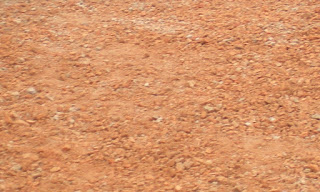
Red and Yellow Soil If you are travelling in a remote location, then you can surely see red soil. Known for it's texture and colour, it has 90.47% of non soluble materials, 3.6% of iron content and 0.7% of magnesium. But it is lacking in Calcium Carbonate. It is distributed over an area of 3.5 lakh sq.km and are frequently found in the states of Tamil Nadu, Jharkhand, Orissa and Andhra Pradesh. In Andhra Pradesh, it is commonly seen in Seeshachalam, on the way to Tirupati Hills. If you are planning to cultivate using a part of red soil, then oil seeds, potatoes and some varieties of fruits maybe the right choice to grow with. It has an excellent response to it's nutrients especially fertilizers and provides the cultivator with enormous yield of millet. This is also the kind of soil used in movies, especially in action kind of scenes.
- Get link
- X
- Other Apps
Black Soil The next soil we are going to see about is the black soil. We all know that black soil is good for the cultivation of cotton. Yeah, if you think so, that is right. Now let have a glimpse of black soil. According to it's name it is also black in color. They are otherwise called as the Regur soil. Climatic condition along with the parent rock material are the important factors for the formation of black soil. Across the Northwest Deccan plateau, they are composed of lava flows.They cover Maharashtra, Chhattisgarh, Saurashtra, Malwa and extend in the Southwest region along the Godavari and the Krishna Valleys. As spoken in earlier posts, it is rich in Calcium, potassium and Magnesium. And it is a bit lacking in Nitrogen content. It is primarily used for growing cotton, tobacco, chilly, jowar and ragi. It covers an area of 46 lakh sq.km in India and found mostly in the states of Kerala, Telangana, Andhra Pradesh, Gujarat and Tamil Nadu. It becomes sticky when ...
- Get link
- X
- Other Apps
MY FIRST POST Hello, my dear friends and relatives, This is my first post about the same resources. I hope you may understand some knowledge about resources and conserving resources and few of my simple ideas of conserving resources. Now let us move onto the ideas. ALLUVIAL SOIL So, one of the most widely used soils in India is alluvium. It is spread over an area of 15 lakh sq.km, across India. It is rich in necessary nutrients like Zinc, Magnesium and phosphorus but is devoid of urea and plant residue. It is most commonly found in the Northern plain region along the River Ganges and covers almost 40% of the land surface in that region. One of the special qualities that add to it's use is that it is well suited for canal and tube well irrigation that helps in cultivating necessary crops like rice, potatoes, wheat which is the staple diet for most of the people in Northern part of India. On the other hand, the main threat to it's quality is deforestation and ...